
What Is a Floating Bed? The Illusion Explained
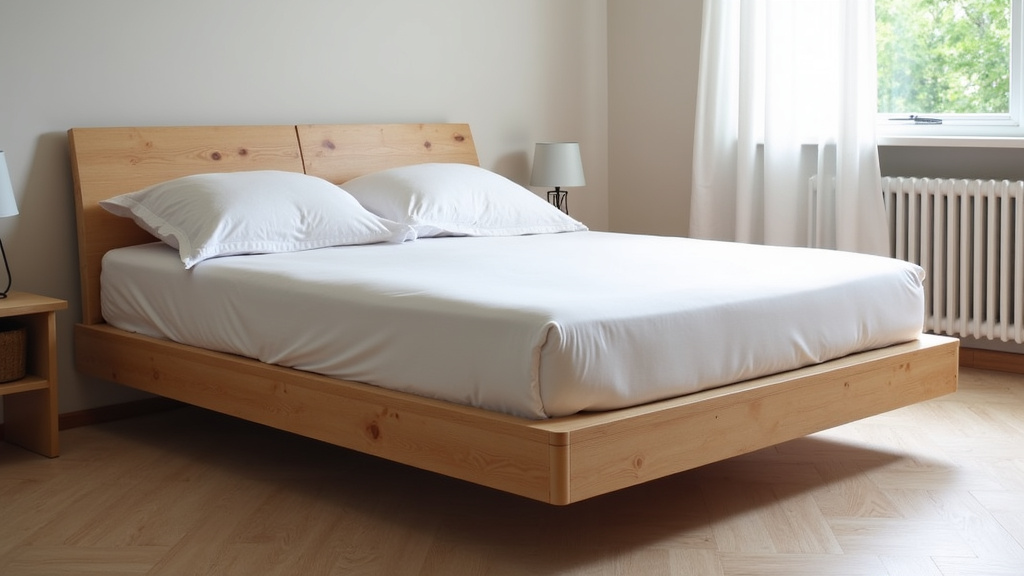
A floating bed is a bed frame designed to create the illusion that it is hovering above the floor. It achieves this visual trick by using a recessed or centrally hidden support base, so the edges of the bed appear unsupported.
While the bed itself looks like it’s levitating, it’s firmly supported. This style is popular for its modern, minimalist look and the sense of open space it can create in a bedroom. We found that many people are drawn to the unique, clean aesthetic.
- A floating bed uses a hidden or recessed base to make the frame look like it’s hovering.
- The support can be a central pedestal, a recessed platform, or legs set far back from the edges.
- It is fully stable and safe, just designed with a different support structure.
- The illusion creates a modern, minimalist, and often airy feel in a bedroom.
- Some designs may have a lower weight capacity than traditional beds.
Below, we break down exactly how this bed illusion works, what types of supports are used, and what to look for if you’re considering one for your home.
How the Floating Bed Illusion Actually Works
So, you’ve seen the bed, and you’re wondering if it’s really floating. You’re not alone. We found that the first question people ask is always about the trick. The secret isn’t magic; it’s smart engineering. The entire visual effect relies on what you can’t see. A traditional bed has legs or a frame at the corners. A floating bed moves its support away from the edges. Your eye naturally connects the visible parts, and with no corner support in sight, the brain fills in the blank: it must be floating.
Decoding the Support Systems
The “hidden” part isn’t always in the same spot. Manufacturers use a few common methods to achieve the same airy look. Understanding these helps you know what you’re actually buying. Let’s break down the main types.
The Central Pedestal Base
Think of a classic pedestal table, but for your mattress. The entire bed rests on a single, sturdy column right in the middle. All the weight travels down through this central pillar. From the side, you see only the mattress and frame floating above a small base. It’s a clean, bold look that works well in open spaces.
The Recessed Platform Design
This is a very common and stable approach. The support platform is simply smaller than the bed frame itself. It might be a full platform set in a foot or more from every edge. Or it could be a set of wide, short legs positioned far under the bed. When you look from the side, these supports are hidden by the overhanging frame, creating the levitation effect. We found this design often offers the most solid feel.
The Inset Leg Structure
Some floating beds do use legs, but they are cleverly placed. Instead of being at the four corners, the legs are set inward, often attached to a reinforced inner frame. This leaves the outer perimeter completely clear. From most standing angles, you can’t see these inset supports, preserving the illusion.
The Physics of “Floating”
Regardless of the style, the principle is the same: a lower center of gravity and inward-placed support. A traditional bed is stable because its supports are wide apart. A floating bed achieves stability by concentrating its support closer to the middle of the mass. It’s like balancing a book on your finger—you find the center point. The bed frame must be rigid enough to not tip when weight is on the edge, which is why materials and construction matter immensely.
Why People Love the Floating Bed Look
The appeal goes beyond just looking cool. We found that the design solves specific visual problems in a bedroom. It creates a sense of calm and order.
Creating a Sense of Space
In a smaller room, a traditional bed frame with bulky legs can feel like an obstacle. A floating bed, with its clear floor line, makes the entire room feel larger. The eye travels underneath the bed, extending the perceived floor space. This effect is similar to why interior designers recommend using furniture on legs in small apartments. It promotes a light, airy atmosphere rather than a cluttered one.
Modern and Minimalist Harmony
The style is inherently modern. It strips away decorative elements and focuses on pure form. If your taste leans toward minimalist decor, Scandinavian design, or contemporary simplicity, a floating bed is a natural centerpiece. It complements clean lines and avoids visual noise.
Easy Cleaning and Maintenance
Here’s a practical benefit many people love. With no legs at the corners, your robot vacuum or regular vacuum cleaner has an unobstructed path underneath. There are no hard-to-reach nooks around bedposts to gather dust bunnies. We found this to be a surprisingly major selling point for allergy sufferers and busy households alike.
Will a Floating Bed Match Your Bedroom?
Before you click “buy,” it’s worth considering how this statement piece will fit with what you already own. It pairs well with certain styles but might clash with others.
Best Style Pairings
- Contemporary & Urban: The sleek lines of a floating bed are a perfect match for modern city living.
- Minimalist & Scandinavian: Think light woods, simple textiles, and uncluttered surfaces. A floating bed is the ultimate fit here.
- Industrial: A floating bed with a metal frame can complement exposed brick and raw materials nicely.
Styles That Might Need a Second Look
- Traditional & Antique: The modern illusion might feel out of place in a room filled with ornate, classic furniture.
- Heavy Rustic: While a wood floating bed can work, very chunky, cabin-style decor might overwhelm the airy effect.
Safety and Stability: The Practical Truth
Let’s address the elephant in the room: Is it safe? Absolutely, when built correctly. All reputable manufacturers engineer floating beds to meet the same weight and stability standards as traditional frames. The key is understanding the specs.
Weight Capacity Considerations
Because the support is concentrated, you should always check the listed weight capacity. We found that most quality floating beds support 500 lbs or more for the frame itself. However, some sleek, minimalist designs might have a slightly lower rating than a heavy-duty platform bed. This isn’t a flaw, but a characteristic of the design. Always choose a bed with a capacity well above the combined weight of the mattress and sleepers.
The Role of Your Mattress
Your mattress is crucial. A flexible mattress on a floating bed might dip in the middle if the support platform isn’t large enough. A firmer, more responsive mattress typically performs best. For platform-style floating beds, you might not need a box spring, but always check the manufacturer’s recommendations to ensure proper support and warranty coverage.
Your Floating Bed Shopping Checklist
Ready to find the right one? Keep these key points in mind as you browse. This checklist helps you compare models fairly and avoid surprises.
1. Measure Your Space (Twice!): Know your room’s dimensions. Remember, the floating effect needs some clear floor space around the bed to truly work its visual magic.
2. Identify the Support Type: Is it a pedestal, recessed platform, or inset legs? Knowing this tells you about stability and floor clearance for cleaning.
3. Check the Weight Capacity: This is non-negotiable for safety. Add the weight of the mattress, bedding, and both sleepers. The bed’s capacity should exceed this total by at least 100 lbs.
4. Consider Your Mattress: Ensure your current mattress is compatible. If buying new, look for a medium to medium-firm mattress that works well with platform support.
5. Read Assembly Reviews: Assembly can be more involved than a simple bed. Look for comments about the ease or difficulty of the setup process to set your expectations.
6. Visualize the Height: Floating beds can have different platform heights. Consider how the mattress height will feel for getting in and out of bed, especially for children or those with mobility concerns.
Conclusion
A floating bed uses a hidden support base to create a clean, modern illusion of levitation. We found the key benefits are a stronger sense of space and a minimalist aesthetic that simplifies cleaning. It is a safe, stable choice when you select the right support type and check the weight capacity. Your next step is to use the shopping checklist to measure your room and verify the bed’s specifications. This ensures the perfect match for your bedroom and a confident purchase.
Frequently Asked Questions
How much assembly does a floating bed require?
Assembly complexity varies by design. You should expect more steps than a standard bed frame, as you must correctly position and secure the hidden support structure. Always read reviews about the setup process to understand if you might need a second person or specific tools.
Can I use my existing mattress with a floating bed?
It depends on the bed’s support system. Many floating beds are platform designs that work without a box spring, but you must ensure your mattress is compatible. A medium to medium-firm mattress typically performs best to prevent sagging on recessed platforms.
Do floating beds cost more than regular beds?
Pricing can be comparable to mid-range traditional bed frames. The cost is driven more by the material and engineering of the hidden support than by the floating effect itself. You can find options across various price points, but always verify the quality of the construction.
Will a floating bed creak or make noise?
A well-built floating bed should be silent, just like a quality traditional frame. Any potential noise comes from loose joints or poor materials, not the floating design. Checking for solid construction in the product details will help ensure a quiet, stable experience.
Is a floating bed safe for a child’s room?
Yes, it is safe when you adhere to the manufacturer’s weight limits and properly assemble the bed. Consider the bed’s height and the potential for little hands to reach underneath. It can be a great space-saving choice, but always ensure the design has no sharp edges or pinch points.