What Age Is a Loft Bed For?
A loft bed is generally recommended for children age 6 and older, but age alone doesn't make a raised bed safe. Check the bed's instructions, the child's ability to climb safely, and the room setup before choosing one.
On this page (7 sections)
A loft bed is generally recommended for children age 6 and older, but age alone doesn't make a raised bed safe. Check the bed's instructions, the child's ability to climb safely, and the room setup before choosing one.
A loft bed raises one sleeping surface and leaves open floor space beneath it. If you want a quick explanation of the design, see [What Is a Loft Bed?
Raised Frames Explained](/what-is-a-loft-bed/).
What age is a loft bed for?
Age 6 is a common minimum for sleeping on a raised bed. The American Academy of Pediatrics advises that children under 6 should not sleep on the upper bunk of a bunk bed, and many families apply the same caution to loft beds.
That age guideline is a starting point, not a guarantee. A child should be able to use the ladder or stairs carefully, stay within the guardrails, and follow household rules even when sleepy.
Follow the bed maker's instructions if they set a higher minimum age or specific use limits. If your child is younger than 6, a low bed keeps the sleeping surface closer to the floor.
Why does age matter for loft beds?
Younger children may be less able to climb safely or respond to a fall risk while half asleep. Loft beds also put the sleeper higher above the floor than ordinary beds.
A raised bed can make a room more useful, but that benefit does not change the need for safe access. If you're considering an added play feature, compare loft beds with slides while checking the maker's safety guidance.
Keep the ladder or stairs clear, and don't let children use the frame as a play structure.
A loft bed can suit a school-age child who can follow clear rules. Reassess the setup if the child climbs the guardrails, jumps from the bed, or struggles to use the stairs at night.
What safety checks matter more than age?
Check the guardrails, mattress fit, access route, and assembly instructions before the first night. These details affect how the bed works in your room and for the intended sleeper.
The U.S. Consumer Product Safety Commission advises consumers to use bunk beds with guardrails on both sides of the upper bunk and to follow the manufacturer's instructions.
Its bunk bed safety guidance also recommends checking that the mattress fits snugly.
For a loft bed, confirm that guardrails run along the open sides and that the mattress does not rise above the maker's limit. Keep the bed away from ceiling fans, light fixtures, windows, and cords that a child could reach.
How should the ladder or stairs affect your choice?
Choose access the sleeper can use steadily and independently. A ladder takes less floor space, while stairs can offer a wider route and may include storage.
Check whether the ladder can go on the side that works for the room. The SHA CERLIN Loft Bed Twin Size has a removable ladder that can be assembled on either side.
This twin metal frame has guardrails, and SHA CERLIN states a maximum bearing capacity of 400 lb. That capacity does not replace checking the bed's age guidance and mattress fit.
Does a staircase make a loft bed suitable for younger children?
A staircase can make climbing feel more manageable, but it doesn't lower the recommended minimum age. Children still need to understand how to use the steps and remain within the guardrails.
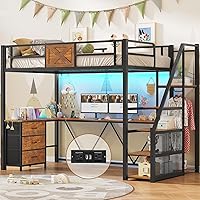
The Itaar twin loft bed has storage stairs that can be installed on either side. Its stated age range is 6–14 years, and the stairs include shelves for books or other small items.
Itaar gives a 200 lb capacity for the stairs and a 400 lb limit for the upper bed. The frame also has a desk and wardrobe, so measure the whole footprint before choosing it for a child's room.
What should you measure in the room?
Measure the ceiling height, mattress height, and space around the bed before buying. The sleeper needs room to sit up without hitting the ceiling, and the top of the mattress must stay below the guardrail.
Also measure the area below the loft. A desk or dresser can make that space useful, but it should not sit where a child could use it to climb over the guardrail.
Check the route from the floor to the ladder or stairs. If you're arranging a dorm room, how to loft a bed in a dorm covers planning and setup for that space.
Can teens and adults use a loft bed?
Teens and adults can use a loft bed when its stated limits allow it. Verify the weight capacity, mattress instructions, and assembly requirements for the actual sleeper.
The XUWANSHANG Full Over Full Bunk Bed Frame is a stacked bunk design rather than a single-sleeper loft. Its stated upper and lower limits are 350 lb and 500 lb, respectively, so it may suit a shared room where two sleeping spaces matter more than open floor space.
The upper level has a ladder and guardrail. Since this is a bunk bed, check its age guidance for the upper sleeper and follow its mattress thickness limits.
For a single raised bed with a work area below, compare best loft beds with desks for adults. If storage matters more than desk space, see loft beds with dressers.
When should you choose a low bed instead?
Choose a low bed if the child is under 6, cannot climb safely, or won't follow the bed's rules. A lower sleeping surface avoids the climb and reduces the height of a possible fall.
A low bed can still leave some room for storage. Compare wood bed frames with drawers if you want to use space under the bed without raising the mattress to loft height.
A bunk bed and a loft bed solve different space problems. See trundle bed vs bunk bed if you need an extra sleeping spot without making a child climb to a top bed.
How do you choose the right loft bed age?
For loft bed age suitability, start with the maker's minimum age, then check the child's climbing skills and your room's clearances. Wait until the child is at least 6 and ready to follow the rules for a raised bed.
Choose stairs if the child needs a steadier route, and choose a ladder only if they can use it safely. For a girl's room, compare loft beds for girls by layout and storage needs, while keeping the same safety checks in view.
Frequently asked questions
What age is a loft bed safe for?
Many safety recommendations set 6 years as the minimum age for the upper bunk of a bunk bed, and that guidance is often used for loft beds too. Follow the specific bed's age limit and instructions, and consider whether the child can climb carefully, stay inside the guardrails, and follow rules at night.
Can a 5-year-old sleep in a loft bed?
A 5-year-old is younger than the commonly recommended minimum age of 6 for an upper bunk. Choose a low bed instead and wait until the child meets the bed's age guidance and can use its ladder or stairs safely.
Are loft beds safe for adults?
Adults can use a loft bed if its instructions allow adult use and the bed's weight limit, mattress requirements, and assembly guidance fit the intended sleeper. Check the safe climbing route, guardrails, and ceiling clearance, then follow any wall anchoring instructions.
What should I check before buying a loft bed for a child?
Check the stated minimum age, weight limit, guardrail height, mattress thickness limit, ladder or stair design, and assembly and anchoring instructions. Measure the ceiling and room, and make sure the child can climb up and down safely without furniture blocking the route.