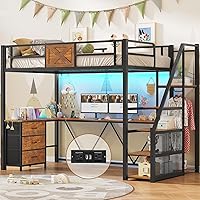
Is a Loft Bed a Good Idea for Your Room?
A loft bed is a good idea when your ceiling has enough clearance, you can climb up safely, and the open floor below serves a real purpose. Measure the room and check who will use the bed before choosing one.
On this page (9 sections)
- Is a loft bed a good idea for your room?
- How much ceiling clearance does a loft bed need?
- Is climbing a ladder or stairs comfortable for the sleeper?
- What can you do with the space beneath a loft bed?
- Which loft bed features fit different room needs?
- When is a loft bed a poor fit?
- Is a loft bed better than a box spring alternative?
- What should you check before buying a loft bed?
- Is a loft bed a good idea? Use this decision rule
A loft bed is a good idea when your ceiling has enough clearance, you can climb up safely, and the floor below serves a real purpose. Measure the room and check who will use the bed before choosing one.
The raised frame can open space for a desk, storage, or a place to sit, but it also puts the mattress higher and adds stairs or a ladder. Start with the room’s measurements and the sleeper’s comfort with climbing.
For a quick explanation of the frame style, see What Is a Loft Bed? Raised Frames Explained.
Then use the checks below to decide if it fits your room.
Is a loft bed a good idea for your room?
A loft bed is a good idea if you gain useful floor space without making the sleeping area cramped or hard to reach. It is a poor fit when the ceiling is low, access feels unsafe, or you have no useful plan for the space underneath.
| A loft may suit you if… | Think twice if… |
|---|---|
| The ceiling leaves comfortable room above the mattress | The sleeper would be close to the ceiling |
| You have a clear use for the floor below | The space below would stay awkward or blocked |
| The sleeper is comfortable with a ladder or stairs | Climbing up or down would be difficult |
| The frame fits without blocking doors or walkways | The room has little space for safe access |
| You can follow the bed’s assembly and safety directions | You cannot secure or assemble it as directed |
A loft frame can make one room do more, especially in a shared bedroom, dorm room, or compact home office. It does not create more floor area, so the layout still needs room for access and everyday movement.
If you need a low bed with another sleeping use, compare it with What Is a Daybed? Uses, Sizes and Room Ideas.
A daybed keeps the mattress closer to the floor and can work as seating, though it does not open the same under-bed space.
How much ceiling clearance does a loft bed need?
Check the assembled frame height, mattress thickness, and space above the mattress before you buy. A bed’s overall height alone does not tell you how much headroom the sleeper will have.
Measure from the floor to the ceiling where the bed will sit. Subtract the frame height and the mattress thickness to estimate the open space above the mattress, then consider how much room the sleeper needs to sit up without hitting the ceiling.
For example, if the frame is 72 in tall and the mattress is 8 in thick, the mattress top would sit about 64 in above the floor. Compare the remaining ceiling space with the sleeper’s height and how they use the bed.
Also check for ceiling fans, light fixtures, sloped ceilings, beams, and overhead shelves. A measurement taken at the center of the room may not apply where the bed frame or a person’s head will be.
What should you measure before choosing a loft bed?
Measure the room in three directions: floor space, vertical clearance, and access path. Check the full frame dimensions, including where the ladder or stairs extend.
- Measure the wall-to-wall space where the bed will sit.
- Mark the bed’s full footprint and the ladder or stair area with tape.
- Measure ceiling height at the bed location, including any slope or obstruction.
- Check the mattress thickness allowed by the guardrail.
- Measure the path to the room, including doorways, corners, and stairs if the frame arrives in parts.
Leave space to open drawers, move a chair, and walk around the room. A loft that fits on paper may still make the desk or closet difficult to reach.
Is climbing a ladder or stairs comfortable for the sleeper?
Choose access based on the person who will climb it every day, not just the room’s footprint. A ladder uses less floor space, while stairs may feel more familiar but take up more room.
Think about nighttime trips, changing sheets, and whether the sleeper can keep a steady grip. Children should be able to climb safely and follow the bed’s age guidance; adults should consider mobility and comfort as well.
Check that the access is stable, easy to reach, and not blocked by furniture. Follow the bed’s assembly instructions and use any recommended wall attachment or other safety measure.
If the loft will go in a dorm, read How to Loft a Dorm Bed for room-specific considerations. Dorm rules, ceiling height, and the bed’s approved setup can affect what works.
What can you do with the space beneath a loft bed?
Plan one practical use for the open area before choosing a loft. A desk, storage, or seating can make the raised frame worthwhile, but only if the space is tall and wide enough for that use.
If you want storage without a raised bed, compare bed frames with storage drawers.
Measure the open area beneath the frame rather than relying on the bed’s overall dimensions. Account for legs, crossbars, stairs, and any furniture that needs space to move.
A desk can suit homework or computer use, while bins or shelves can help keep a small room organized. For built-in storage, compare loft beds with dressers.
Leave enough room to sit, stand, and reach the items you use most.
If you want a work surface, compare the layouts in our best loft beds with desks for adults guide. If stairs with storage appeal to you, see best loft beds with desks and stairs for that combination.
Which loft bed features fit different room needs?
Match the bed’s access and under-bed layout to the job you need the room to do. These examples show different approaches, from a simple raised frame to a setup with a desk and storage.
The SHA CERLIN has a metal frame, guardrail, and slats. Its stated maximum weight recommendation is 400 lb, and the space below can suit a room that needs a flexible open area.
The Itaar includes stairs that can go on either side, shelves in the staircase, and a 58 in space beneath the bed. Check its dimensions and desk footprint against your room before choosing it.
This XUWANSHANG frame is a bunk bed, not a single loft bed. Its full-over-full layout is useful when two sleepers need beds, but it does not leave the same open floor area beneath a single raised mattress.
When is a loft bed a poor fit?
A loft bed is a poor fit when the sleeper cannot use the access safely, the ceiling leaves too little room, or the frame crowds the room. The space-saving benefit does not make up for those problems.
Look at other bed styles if the sleeper has trouble climbing, often gets up at night, or would feel uneasy sleeping at height. A standard bed may be easier to use and make the room simpler to arrange.
If you also want to reclaim floor space, consider whether a Murphy bed suits the room.
Skip a loft if the room’s ceiling fan, slope, or light fixture leaves little space above the mattress. Also reconsider it if the ladder or stairs would block a door, closet, desk chair, or main walkway.
Is a loft bed better than a box spring alternative?
A loft bed changes where the sleeping surface sits and how you use the floor, while a box spring alternative changes mattress support at a regular bed height. These solve different room problems.
If you want more open floor space, a loft may help. If you mainly want to change how a mattress is supported, compare options in Box Spring Alternative Ideas That Actually Work.
Do not choose a loft just to raise a mattress a little. Its height and access are part of the design, so the frame should match your room and daily routine.
What should you check before buying a loft bed?
Before choosing, confirm the dimensions, mattress fit, access, and safety details for the exact bed. These checks help avoid a frame that fits the room but is uncomfortable or impractical to use.
- Measure the room and ceiling where the bed will go.
- Check the mattress size and maximum thickness allowed by the guardrail.
- Review the stated weight limit and who the bed is designed for.
- Decide whether a ladder or stairs suit the sleeper.
- Check whether the stairs or ladder can be placed on the side your room allows.
- Read the assembly instructions and any guidance about securing the frame.
- Confirm there is room for the planned desk, storage, or seating below.
If a loft feels too tall or awkward, a lower bed with another sleeping option may suit your space better. Compare the trade-offs in Trundle Bed vs Sofa Bed: Which Works Better for Guests?.
Is a loft bed a good idea? Use this decision rule
A loft bed is a good idea when it fits the room vertically, the sleeper can access it comfortably, and you will use the floor below. Choose another bed style if any one of those checks fails.
Pick a simpler twin loft when you want open space and flexible access.
Pick a desk or stair model when those built-in features fit your layout, and choose a bunk frame when you need two sleeping surfaces.
Compare best loft bed twin options after measuring your room. For a girl's room, see loft beds for girls.
Frequently asked questions
Is a loft bed a good idea in a small bedroom?
A loft bed can be a good idea in a small bedroom when the room has enough ceiling clearance and you can use the floor space below for a desk, storage or another activity. Measure the full frame and ladder or stairs, then check that drawers, doors and walkways still have room.
How much ceiling clearance does a loft bed need?
There is no single clearance that works for every loft bed and room. Measure from the floor to the ceiling, subtract the frame height and mattress thickness, and leave comfortable space above the mattress for the sleeper.
Check the bed's assembled height and safety guidance before buying.
Are loft beds safe for adults?
Some loft beds are designed for adult use, but suitability depends on the model's stated weight limit, guardrails, access and setup. Check those details and follow the assembly instructions.
If climbing or getting down would be difficult, a standard-height bed may be a better fit.
Is a loft bed better than a bunk bed?
A loft bed raises one sleeping surface to free the floor below, while a bunk bed stacks two sleeping surfaces. Choose a loft when you need usable room under one bed; choose a bunk when you need two beds and have enough ceiling height for both.
What should go under a loft bed?
Use the space under a loft bed for an activity or storage that fits its height and access, such as a desk, reading spot or bins. Measure the usable area beneath the frame, including supports and stairs, and leave clear paths to the desk, drawers or nearby furniture.