How to Choose a Box Spring Setup with a Headboard
A box spring and headboard work together when the mattress, foundation, frame, and attachment points match. Check each part’s size and connection method before you assemble the bed.
On this page (9 sections)
- How does a box spring connect to a headboard?
- What should you match before choosing a setup?
- Do you need a bed frame under a box spring?
- Should you use a separate box spring or a foundation?
- How do you choose a setup for a twin bed?
- What headboard attachment options can you use?
- How can you check stability and support?
- What if you already have an adjustable base?
- Which box spring setup should you choose?
A box spring with a headboard works when the mattress, foundation, frame, and headboard connections are compatible. Match the mattress size, check how the foundation rests on the frame, and confirm how the headboard attaches before assembling the bed.
A box spring adds support beneath a mattress, while the headboard typically connects to the bed frame or wall. They do different jobs, so choosing a foundation alone won't tell you whether the headboard can attach.
If you're still comparing foundations, start with our guide to the best box spring for bed support. Then check how its size and setup fit the rest of your bed.
How does a box spring connect to a headboard?
A box spring usually rests on a frame or bed base; the headboard attaches to the frame or wall. The connection between the headboard and frame matters most when you want the headboard to move with the bed.
Look for attachment points on both pieces. A frame may have headboard brackets, while a headboard may have legs or mounting holes.
The parts need to line up, and the fasteners must suit the materials and instructions.
Some headboards stand on the floor behind the bed. Others mount to the wall.
These setups can work without direct attachment to the box spring, but each needs a stable position and the right hardware.
Don't assume that a headboard will fit because the mattress and box spring share a size label. The frame's bracket spacing and the headboard's mounting pattern can still differ.
What should you match before choosing a setup?
Match mattress size, foundation dimensions, frame support, and headboard attachment points. For a split queen foundation, see split queen box spring encasement.
A mismatch in any one of these can leave parts unsupported or prevent a secure connection.
| Part | What to check |
|---|---|
| Mattress | Its stated size and support requirements |
| Box spring or foundation | Its size, height, and how it sits on a frame |
| Bed frame | Mattress-size compatibility, support points, and headboard brackets |
| Headboard | Width, mounting method, hole spacing, and required hardware |
| Room | Bed height, wall clearance, and space for any headboard legs |
Measure the actual parts when you can. Size names such as queen or twin give you a useful starting point, but they don't confirm bracket spacing or the overall bed height.
Check the combined height, too. Compare standard and low-profile box springs when deciding how much lift the foundation should add.
Add the frame, foundation, and mattress heights, then consider how high the headboard will sit relative to the mattress.
A headboard that appears too low or high can change the look and feel of the setup.
Do you need a bed frame under a box spring?
Use a frame or base that supports the foundation and mattress according to their instructions. A headboard by itself is not a substitute for a supporting bed frame unless it's specifically designed to serve that role.
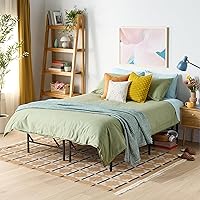
A standard metal frame can support a separate box spring and mattress. For example, the Amazon Basics Metal Bed Frame is designed to support a box spring and mattress, and its described assembly uses a lock-together system without tools.
Confirm whether the frame has headboard brackets before you choose it. The frame's mattress-support role doesn't by itself confirm that it connects to a particular headboard.
If you already have a slatted bed, check whether it supports your mattress directly before adding another foundation. Our guide on whether you need a box spring with slats explains what to compare.
Should you use a separate box spring or a foundation?
Choose a separate box spring or foundation when your frame and mattress instructions call for one. For a thin support layer over slats, compare bunkie boards with holes.
For another material option, compare full-size wood box springs. A foundation can also set the mattress at a height you prefer, but its dimensions and support style must work with the frame.
Some foundations use metal support with horizontal slats and a fabric cover. The Amazon Basics Smart Box Spring Bed Base is 5 in high and has a removable two-piece zip cover for spot cleaning.
This base is described as a full-size model. Make sure the dimensions match your mattress and frame; don't rely on a product name alone when checking fit.
A foundation with its own legs may be intended to stand as a bed base. If you plan to place it inside a separate frame, check that the frame's shape and dimensions accommodate it without shifting.
How do you choose a setup for a twin bed?
For a twin bed, check the mattress and foundation dimensions first, then choose a frame with a matching support layout. The headboard still needs a compatible attachment method, even when all the bed parts are labeled twin.
The Amazon Basics Sturdy Smart Box Spring Bed is a 5 in twin foundation with metal support, horizontal slats, and a removable cover. Its listed dimensions are 74 x 38 in, which can help you compare it with your frame.
If you're choosing the foundation first, compare more options in our best box spring twin guide. Check that the frame and headboard use the same size and compatible mounting points.
What headboard attachment options can you use?
Choose a mounting method that matches the headboard's design and your frame or wall. Common setups include frame-mounted, wall-mounted, and freestanding headboards.
A frame-mounted headboard connects through brackets or other hardware designed for that frame. Check the hole spacing and fastener size before assembly, and don't force hardware that doesn't line up.
A wall-mounted headboard uses wall fasteners rather than the bed frame. Follow the headboard instructions and use fasteners suited to the wall material.
If you rent or can't make holes, consider a freestanding design or a compatible frame-mounted option.
A freestanding headboard stands behind the bed. Check its base and instructions for placement, then leave enough room for the bed to move without pushing it out of position.
How can you check stability and support?
Check that the frame sits level, the foundation is fully supported, and the headboard stays secure. Recheck the connections after assembly and if the bed shifts during normal use.
For a frame-mounted headboard, tighten the correct fasteners and check for movement at the brackets. For a wall-mounted headboard, verify the wall attachment using the headboard's instructions.
Follow the weight and support guidance for each bed component. A frame's capacity doesn't automatically establish the capacity of the foundation, mattress, or headboard connection.
If you use a foam mattress, verify whether it needs a foundation or can sit on a compatible frame. Our explainer on box springs and foam mattresses covers that choice.
What if you already have an adjustable base?
An adjustable base may use a different support setup from a box spring and fixed frame. Check the base instructions before adding a foundation or headboard, since extra layers can affect fit and movement.
Some adjustable bases have headboard brackets, while others need a separate mounting solution. Confirm that the headboard can stay clear of the base through its full range of movement.
If the remote is the issue, see our guide to adjustable base remote replacements. For a different foundation style, compare our Zinus SmartBase mattress foundation guide.
Which box spring setup should you choose?
Choose a separate frame and foundation if your mattress needs a box spring and the frame supports one. Choose a foundation with legs only if it can safely support the mattress on its own, and select a headboard mounting method that fits your room and hardware.
For queen setups, compare our best queen box springs and confirm that the frame and headboard use compatible queen dimensions. If you need a frame for a separate foundation, see our best box spring frame options.
Measure all four parts before ordering: mattress, foundation, frame, and headboard. Pick the setup whose support and attachment points match, then assemble it according to each component's instructions.
Frequently asked questions
Can you attach a headboard to a box spring?
A headboard usually attaches to a bed frame or wall, not to the box spring itself. Check whether the frame has headboard brackets, whether the headboard includes compatible hardware, and whether their hole spacing matches.
If the foundation has legs, confirm that it can sit securely inside the frame.
Does a box spring need a special frame for a headboard?
It needs a frame or mounting setup that can connect to the headboard. Some frames have brackets, while others need a separate headboard adapter or wall mounting.
Confirm the frame and headboard connection method before buying, and make sure the frame supports the foundation and mattress.
Can a headboard stand behind a bed without attaching?
A freestanding headboard can sit behind a bed if its base and the room layout keep it stable. Follow its assembly instructions and check that it won't tip or shift when the bed moves.
A wall-mounted or frame-mounted headboard needs the correct fasteners for that surface.
Do you need a box spring with every mattress?
No. Some mattresses need a box spring or foundation, while others can rest on a platform or slatted frame.
Check the mattress maker's support requirements and the frame's instructions before choosing.
For foam mattresses, see our guide to whether a foam mattress needs a box spring.
How do you keep a headboard from wobbling?
Tighten the correct frame or wall fasteners and check that the headboard is level. Use only hardware designed for the headboard and its mounting surface, and recheck the connections after assembly.
If the frame lacks brackets, use a compatible adapter or a separate mounting method approved for the headboard.