Do You Need a Bunkie Board With Slats? Explained
On this page (3 sections)
You generally do not need a bunkie board with a slatted bed base, as the slats themselves can often provide adequate support for your mattress. However, adding a bunkie board can offer extra support and prevent mattress sagging, especially with lighter or older slatted frames.
Deciding whether to add a bunkie board depends on your bed frame’s slat spacing and the type of mattress you own. We found that some modern bed frames with closely spaced slats may not benefit much from an extra board. But if your slats are wide apart or you want to extend your mattress’s life, a bunkie board could be a smart choice.
- Bunkie boards are thin platforms.
- They add a solid layer of support.
- Slats provide support, but spacing matters.
- A bunkie board can help prevent sagging.
- It’s often not needed with modern, well-built frames.
Let’s break down when a bunkie board makes sense with your slatted bed and when you can skip it.
When You Might Need a Bunkie Board with Slats
So, you’ve got a bed frame with slats and you’re wondering about a bunkie board. It’s a common question! Think of your bed frame’s slats as the foundation for your mattress. They do the heavy lifting of supporting you while you sleep. Most of the time, these slats are enough.
However, there are situations where adding a bunkie board – a thin, solid platform – can really make a difference. It’s not always a must-have, but it can be a smart addition to protect your mattress and improve your sleep. We’ve looked into when this extra layer is a good idea.
Understanding Your Slats: The Key Factor
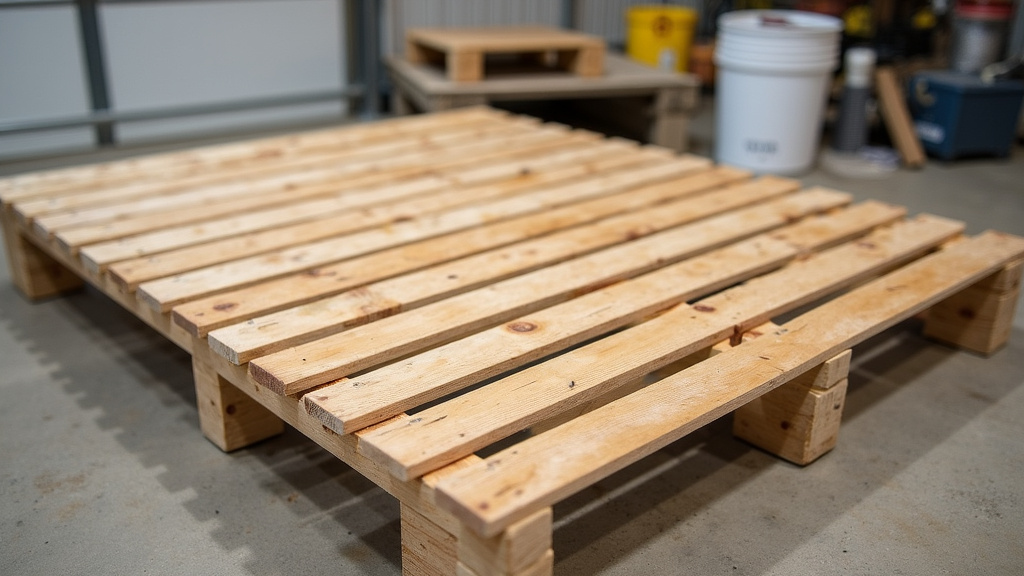
The first thing to consider is the spacing between your bed frame’s slats. This is probably the biggest predictor of whether you need a bunkie board. If your slats are very close together, they offer a more solid surface. This is often the case with newer, well-built bed frames.
On the other hand, if your slatted bed base has widely spaced slats, your mattress can start to sag between them. This is especially true for mattresses that are less firm or made of materials that can easily sink.
What’s the Ideal Slat Spacing?
Many mattress manufacturers have guidelines for slat spacing. Generally, slats should be no more than 2.5 to 3 inches apart. This spacing provides enough support without being so close that it traps too much air. If your slats are wider than this, you’re more likely to benefit from a bunkie board.
We found that a gap larger than 3 inches can lead to premature mattress wear. The mattress can’t get the consistent support it needs. This can cause certain areas to wear out faster than others.
Mattress Type and Its Support Needs
The kind of mattress you have also plays a big role. Some mattresses are designed to work with a variety of bases, while others are more particular.
Memory Foam and Newer Mattress Types
Memory foam mattresses, for instance, can be quite heavy and conform to surfaces. If they’re placed on widely spaced slats, the foam can compress unevenly. This leads to sagging and can affect the mattress’s ability to offer proper support and comfort. Many memory foam mattress companies suggest a solid or nearly solid foundation.
We’ve seen that newer mattress technologies, like hybrids or high-density foam, often require more uniform support. They are built to be responsive. Slats that are too far apart can make these mattresses feel less supportive. A bunkie board offers that consistent surface.
Traditional Innerspring Mattresses
Older or simpler innerspring mattresses might be more forgiving. They often have a sturdier internal structure. However, even these can benefit from better support. If your innerspring mattress is starting to feel a bit tired, a bunkie board can sometimes give it a new lease on life. It helps keep the springs aligned.
When a Bunkie Board is a Good Idea
So, let’s pinpoint the specific scenarios where adding a bunkie board is a smart move. It’s about preventing problems before they start or fixing issues you might already be noticing.
Preventing Mattress Sagging
This is the primary reason people buy bunkie boards. If you see any dip or sag in your mattress, especially in the middle or where you sleep most, a bunkie board can help. It distributes your weight more evenly across the mattress.
Research suggests that consistent support is key to mattress longevity (National Sleep Foundation). When a mattress doesn’t have it, its internal structure can break down faster. A bunkie board acts like a bridge, filling in the gaps your slats might leave.
Extending Mattress Lifespan
A mattress is an investment. You want it to last as long as possible. By providing a firm, flat surface, a bunkie board reduces stress on the mattress’s internal components. This means less wear and tear over time.
We found that many mattress warranties require a proper foundation. If you’re using slats that are too far apart, you might inadvertently void your warranty. A bunkie board ensures you’re meeting the manufacturer’s requirements.
Strengthening a Weak Bed Frame
Sometimes, the issue isn’t just the mattress; it’s the bed frame itself. Older frames or those made with less sturdy materials might not hold up well over time. The slats might bend or even break under pressure.
A bunkie board adds an extra layer of stability. It can help distribute weight more evenly across the entire frame. This reduces the strain on individual slats and the overall frame structure. It’s like giving your bed a supportive hug.
Reducing Motion Transfer
If you share a bed, you know how annoying it can be to feel your partner toss and turn. A solid bunkie board can help absorb some of that motion. It creates a more stable platform, which means less of their movement transfers to your side of the bed.
Think of it like adding a layer of insulation. It dampens the vibrations before they reach you. This can lead to more uninterrupted sleep for both of you.
Noise Reduction
Squeaky bed frames are incredibly disruptive. Often, the noise comes from slats rubbing against the frame or against each other. A bunkie board can act as a buffer.
When you place a bunkie board on top of the slats, it can stop them from moving independently. This can significantly reduce or eliminate those annoying creaks and groans. It’s a simple fix for a common annoyance.
When You Probably Don’t Need a Bunkie Board
While bunkie boards offer benefits, they aren’t always necessary. In many cases, your existing slatted base is perfectly adequate. Let’s look at when you can likely skip this extra purchase.
Modern Bed Frames with Close Slats
Many contemporary bed frames are designed with sleep comfort and mattress support in mind. They often feature a high density of closely spaced slats. These slats are usually made from strong materials like solid wood or metal.
If your bed frame has slats that are less than 3 inches apart and feel sturdy, adding a bunkie board might be redundant. We found that these frames already provide excellent support for most mattresses. It’s like adding an extra plate when you’re already full!
Mattresses That Don’t Require Solid Bases
Some mattresses, particularly certain types of innerspring or hybrid models, are designed to work well with slatted bases. Their construction is robust enough to handle the minor gaps between slats without issue.
Always check your mattress manufacturer’s recommendations. If they state that a slatted base with a certain spacing is acceptable, you likely don’t need to add more support. Doing so might even alter the feel of your mattress in a way you don’t prefer.
Budget Constraints
Let’s be practical: bunkie boards are an additional cost. If your current setup is working fine and your mattress is in good condition, there’s no compelling reason to spend extra money. Your existing slats might be doing a great job already.
Many experts suggest that if your bed frame is in good condition and your mattress isn’t showing signs of premature wear, stick with what you have. Save the bunkie board for when it’s truly needed.
Types of Bunkie Boards and Their Features
If you decide a bunkie board is right for you, you’ll find there are a few different types available. Understanding these can help you choose the best one for your needs.
Standard Bunkie Boards
These are typically made of wood or particleboard. They provide a flat, solid surface. They are usually thin and designed to fit right on top of your existing slats. They offer good support and help prevent sagging.
Metal Bunkie Boards
Often made from sturdy metal frames, these can be very durable. They might offer a bit more airflow than solid wood or particleboard options, which can be good for some mattress types. They are also often lightweight and easy to set up.
Box Spring Alternatives
Some bunkie boards are designed to replace a traditional box spring. They offer a similar height and support level but are generally more streamlined and can be a good option for low-profile beds. They effectively provide a solid base.
Making the Right Choice for Your Bed
Deciding whether to add a bunkie board boils down to a few key considerations. It’s not a one-size-fits-all answer. You need to look at your specific bed, your mattress, and what you’re experiencing.
Think about the age and construction of your bed frame. Are the slats sturdy? How much space is between them? What kind of mattress are you trying to support? If you’re noticing any dips or discomfort, a bunkie board is worth considering.
A Quick Checklist to Guide You
Here’s a simple way to help you decide if a bunkie board is for you:
- Are your bed slats more than 3 inches apart?
- Is your mattress sagging or showing premature wear?
- Do you have a memory foam or newer mattress type?
- Does your bed frame feel a bit wobbly or less sturdy?
- Are you trying to reduce noise or motion transfer?
- Do you want to ensure your mattress warranty remains valid?
If you answered “yes” to two or more of these questions, a bunkie board is likely a good investment for your sleep setup. If most answers are “no,” your current slatted base is probably doing a fine job.
Conclusion
Ultimately, whether you need a bunkie board with your slatted bed frame depends on your specific situation. We’ve found that if your slats are spaced more than 3 inches apart, or if you have a heavier mattress like memory foam, a bunkie board offers essential support. It can prevent sagging and extend your mattress’s life. If your frame is modern with close, sturdy slats and your mattress is compatible, you might not need the extra layer. Before you buy, assess your bed frame’s condition and your mattress type. Consider a bunkie board if you answered “yes” to a few key questions about support, wear, or comfort. Your decision should focus on ensuring your mattress gets the consistent foundation it needs for better sleep and longevity.
Frequently Asked Questions
How do I know if my bed slats are too far apart?
You can measure the gap between your bed slats. Most mattress manufacturers recommend a spacing of no more than 2.5 to 3 inches. If the distance between your slats is wider than this, your mattress may not receive adequate support.
Can a bunkie board actually help my mattress last longer?
Yes, a bunkie board can help extend your mattress’s lifespan. By providing a solid and even surface, it prevents your mattress from sagging between the slats. This even weight distribution reduces stress on the mattress’s internal components, minimizing premature wear.
Will a bunkie board make my mattress feel firmer?
A bunkie board typically provides a more solid foundation, which can make your mattress feel a bit firmer. It eliminates the slight give that might occur between wide slats, offering a more consistent surface. This can improve overall support and comfort for some sleepers.
Are bunkie boards necessary for all types of mattresses?
Not necessarily. While memory foam and hybrid mattresses often benefit most from a solid foundation like a bunkie board, some traditional innerspring mattresses are more forgiving. Always check your mattress manufacturer’s specific warranty and support recommendations to be sure.
Can I put a bunkie board directly on the floor?
A bunkie board is designed to sit on top of your bed frame’s slats to provide an additional layer of support. Placing it directly on the floor without a frame may trap moisture and reduce airflow, which isn’t ideal for your mattress.